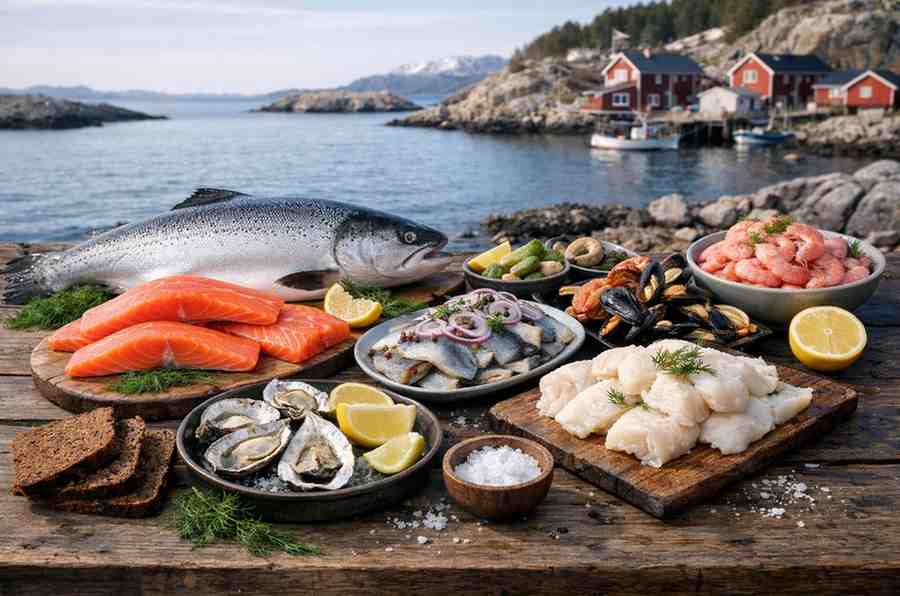
Scandinavian cuisine is inseparable from the sea. Stretching across Norway, Sweden, Denmark, Finland, and Iceland, the Nordic region is defined by long coastlines, fjords, archipelagos, and cold, pristine waters teeming with fish and shellfish. For centuries, seafood has been more than nourishment in Scandinavia—it has been a way of life, shaping traditions, preservation methods, and culinary identity.
Geography and Climate: Why Seafood Matters
Scandinavia’s geography explains its deep reliance on seafood. With harsh winters, short growing seasons, and limited agricultural land, coastal communities historically depended on fishing for survival. The cold waters of the North Atlantic, Baltic Sea, and Arctic Ocean are rich in nutrients, producing fish with firm flesh and clean flavors.
This environment encouraged a cuisine centered on cod, herring, salmon, mackerel, shrimp, mussels, and shellfish, along with innovative preservation methods to endure long winters.
Historical Roots of Seafood in Scandinavia
Seafood has been central to Scandinavian diets since the Viking Age and earlier. Vikings were skilled fishermen and traders, exporting dried and salted fish across Europe. Stockfish—air-dried cod—became one of the region’s most valuable commodities and remains a staple today.
Without refrigeration, Scandinavians mastered preservation techniques that still define their cuisine.
- Salting
- Drying
- Smoking
- Fermenting
- Pickling
Iconic Scandinavian Seafood Dishes
Herring: The Cornerstone Fish
Herring is one of the most important fish in Scandinavian culinary history. Affordable and versatile, it appears in countless traditional dishes.
- Pickled herring in sweet, sour, mustard, or creamy sauces
- Fried or baked herring with potatoes
- Fermented herring (surströmming) in Sweden
Salmon: Fresh, Cured, and Celebrated
Salmon holds a prestigious place in modern Scandinavian cuisine and is enjoyed raw, cured, smoked, or simply cooked.
- Gravlax cured with salt, sugar, and dill
- Cold-smoked and hot-smoked salmon
- Roasted or pan-fried salmon with herbs and butter
Cod and Stockfish
Cod has fed Scandinavians for centuries. Fresh cod is used in soups and stews, while dried cod is soaked and cooked into hearty meals. Cod cheeks, tongues, and liver are considered delicacies in Norway and Iceland.
Shellfish and Crustaceans
- Shrimp served simply with mayonnaise and lemon
- Mussels and clams in light broths
- Crayfish celebrated at Swedish summer feasts
- Lobster prized along Norway’s coastline
Traditional Preservation Techniques
- Smoking: Hot and cold smoking using juniper, alder, or birch wood
- Pickling: Fish preserved in vinegar, sugar, salt, and spices
- Fermentation: Strongly flavored dishes like surströmming and rakfisk
Modern Scandinavian Seafood Cuisine
The New Nordic movement has redefined Scandinavian food, emphasizing seasonal ingredients, sustainability, clean flavors, and respect for tradition. Seafood plays a starring role, often paired with foraged herbs, seaweed, and root vegetables.
Sustainability and Respect for Nature
Scandinavia is a global leader in sustainable fishing practices. Strict regulations and quotas protect marine ecosystems, reflecting a cultural belief that nature must be preserved for future generations.
Seafood in Scandinavian Culture and Celebrations
Seafood is deeply woven into Scandinavian social life—from Christmas smorgasbords to summer feasts by the sea. Shared meals centered on fish reflect values of balance, comfort, and togetherness.
Seafood is the soul of Scandinavian cuisine. Shaped by geography, climate, and history, it reflects a deep respect for the sea and the resources it provides.
From humble pickled herring to refined gravlax and modern fine-dining creations, Scandinavian seafood celebrates purity, tradition, and sustainability—proving that the best flavors come from working with nature, not against it.