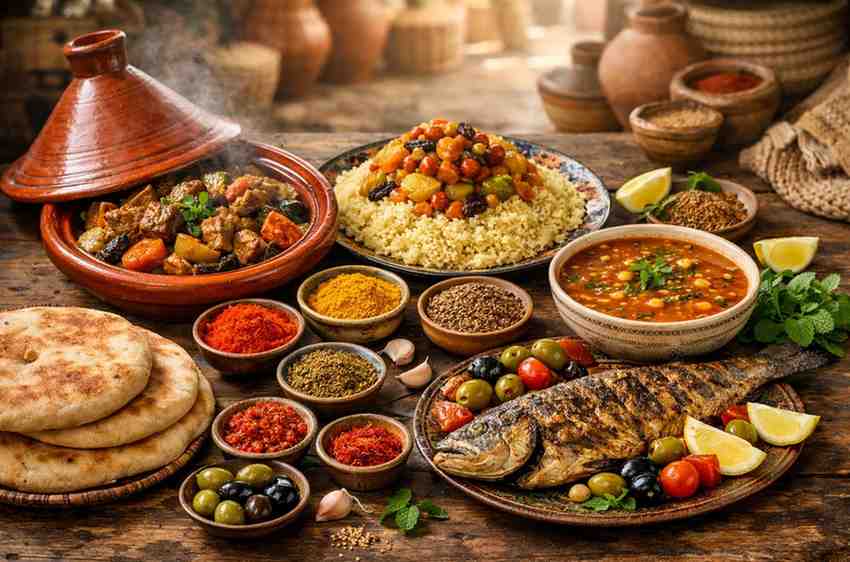
North African cuisine is a vibrant tapestry of bold spices, ancient traditions, and diverse cultural influences. Stretching across Morocco, Algeria, Tunisia, Libya, and Egypt, the region’s food reflects centuries of trade, conquest, migration, and adaptation. From fragrant stews simmered slowly in clay pots to hearty grain-based staples shared communally, North African dishes are deeply connected to the land, climate, and people.
Cultural and Historical Influences
North African cuisine has been shaped by Berber, Arab, Ottoman, Mediterranean, and African traditions. Ancient spice routes introduced cumin, cinnamon, saffron, and coriander, while trade across the Mediterranean brought olive oil, wheat, and seafood. The Arab expansion spread couscous and slow-cooked stews, while Ottoman rule influenced pastries and meat dishes.
Despite regional variations, many North African dishes share common elements: grains, legumes, vegetables, aromatic spices, olive oil, and slow-cooked meats.
Couscous: The Heart of North African Cuisine
Couscous is the most iconic and widely consumed dish across North Africa. Made from steamed semolina wheat granules, it is traditionally served with vegetables, chickpeas, and meat such as lamb, chicken, or beef.
Each region adds its own twist—sweetened versions with raisins and caramelized onions in Morocco, spicy broths in Tunisia, and lighter vegetable-focused versions in Algeria. More than a meal, couscous is a symbol of unity and heritage.
Tagine: Slow Cooking with Soul
Named after the conical clay pot it is cooked in, tagine is a cornerstone of Moroccan cuisine. The unique shape traps steam, allowing ingredients to cook slowly and retain moisture.
- Lamb with prunes and almonds
- Chicken with preserved lemons and olives
- Fish tagine with tomatoes, peppers, and spices
Spices like ginger, turmeric, cumin, and saffron infuse deeply, creating rich yet balanced flavors.
Harira: A Comforting North African Soup
Harira is a traditional Moroccan soup, especially during Ramadan. Made with tomatoes, lentils, chickpeas, herbs, and sometimes meat, it is flavored with cinnamon, ginger, and fresh cilantro. Often served with dates or flatbread, harira offers warmth and sustenance.
Brik: Crispy Street Food Delight
Popular in Tunisia and parts of Libya, brik is a thin pastry filled with egg, tuna, parsley, onions, and spices, then fried until golden. The runny egg yolk bursts when cut open. Brik showcases North Africa’s love for contrast—crispy textures paired with soft, rich fillings.
Ful Medames: A Staple of Egyptian Cuisine
Ful medames is made from slow-cooked fava beans, seasoned with garlic, lemon juice, olive oil, and cumin. Served for breakfast or lunch with flatbread, eggs, pickles, and vegetables, it reflects the Egyptian tradition of making the most of humble ingredients.
Shakshuka: Eggs in Spiced Tomato Sauce
Shakshuka, popular in Tunisia and Libya, consists of eggs gently poached in a rich tomato, pepper, onion, garlic, and spice sauce. Often served in the pan it is cooked in, it is a communal dish enjoyed with crusty bread.
Merguez: Spiced Sausages with Character
Merguez sausages, made from lamb or beef and seasoned with harissa, cumin, garlic, and paprika, are bold, smoky, and slightly spicy. Grilled or pan-fried, they are commonly served with bread, couscous, or eggs.
Harissa: The Signature Chili Paste
Harissa is a fiery chili paste originating in Tunisia, made from dried red peppers, garlic, olive oil, and spices. Used as a condiment, marinade, or cooking base, it adds depth, heat, and complexity. Recipes are often passed down through generations.
North African Food and Social Life
Meals are deeply social. Dishes are often served in large communal plates to encourage sharing and conversation. Hospitality is central, and food plays a key role in religious and cultural celebrations—from Ramadan feasts to weddings and harvest festivals.
Iconic North African dishes tell a story of resilience, creativity, and cultural fusion. Rooted in ancient traditions yet constantly evolving, the cuisine balances spice and subtlety, richness and restraint.
From steaming couscous and slow-simmered tagines to fiery harissa, North African food offers an unforgettable journey through history, flavor, and community. Every bite reflects identity, memory, and connection.